What is an active bystander?
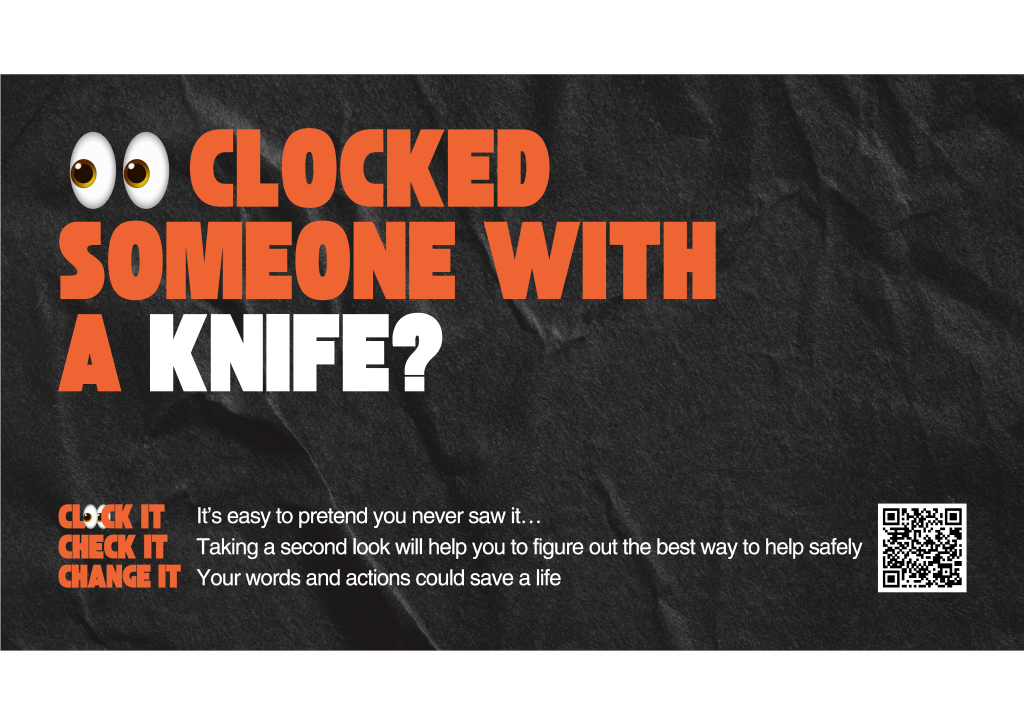
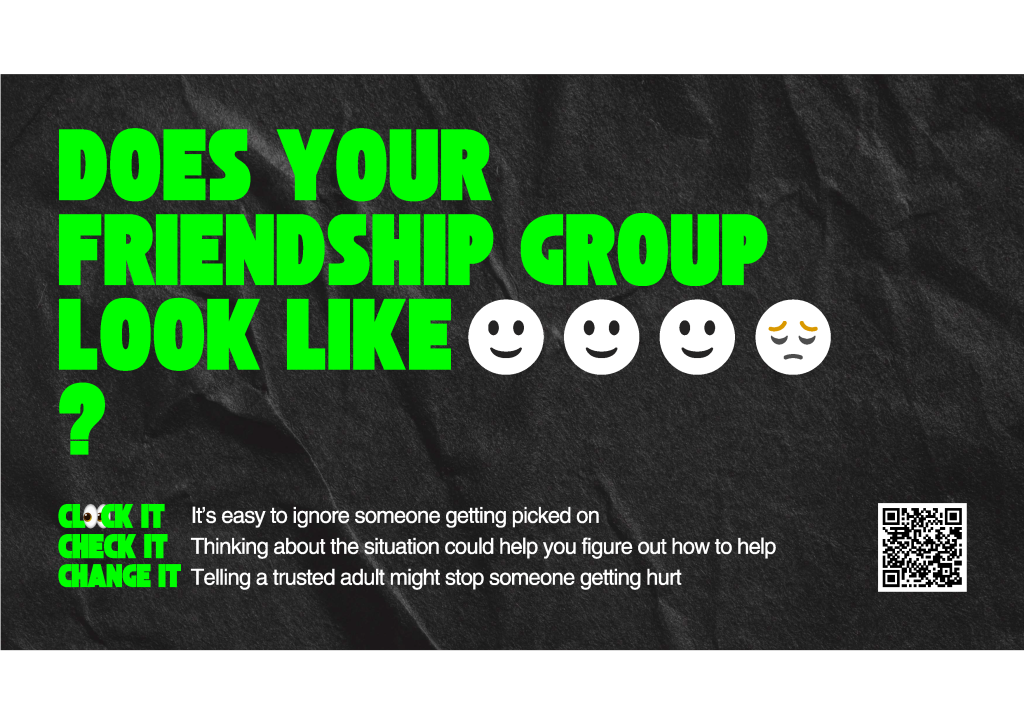
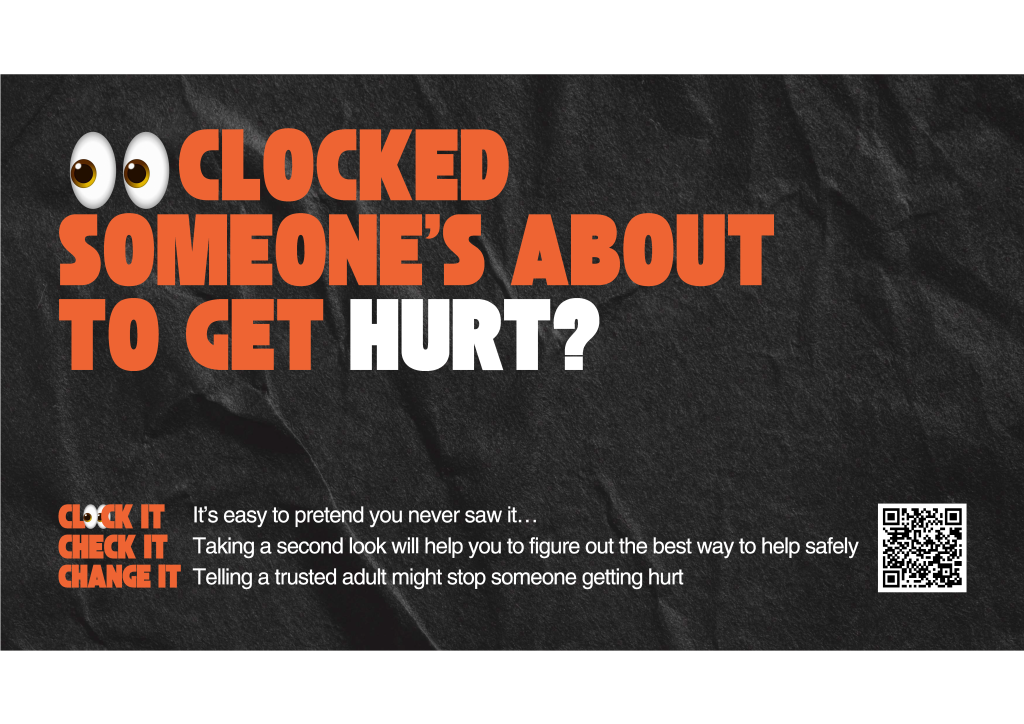
Many people will witness unacceptable behaviour at some point in their lives. This can involve someone around them taking part in activities such as:
- Bullying or harassment
- Violent or threatening behaviour
- Sexual misconduct
- Knife or weapon carrying
- Discrimination
What difference can I make?
WHAT CAN I DO?
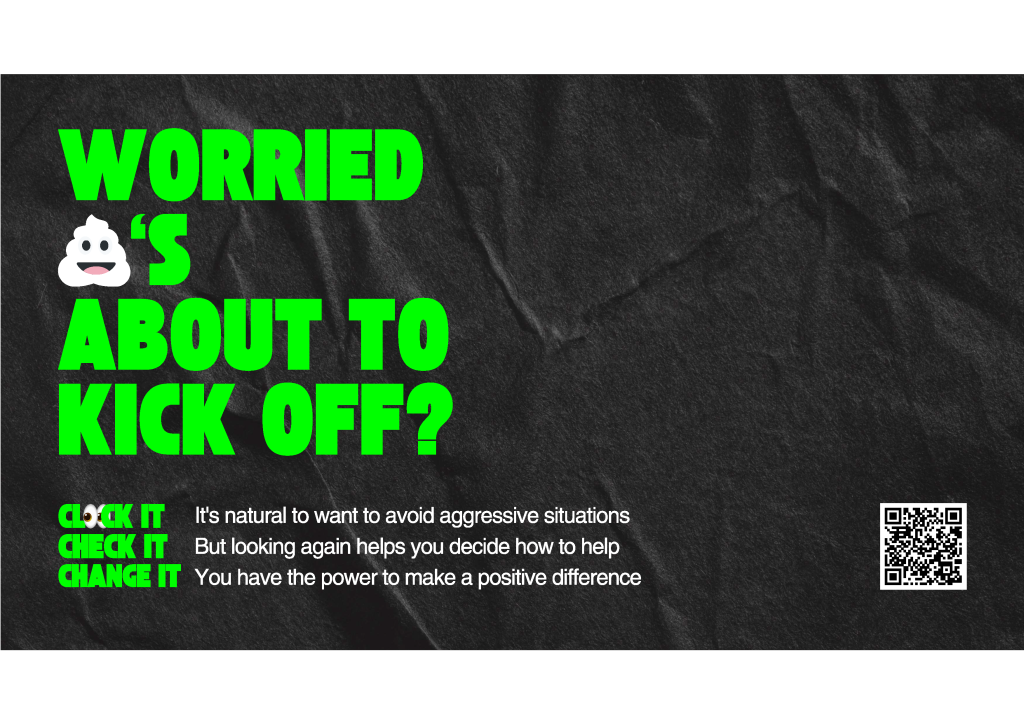
Stepping in could be as simple as asking someone who is being threatened or being aggressive if they're okay.
We want young people to know that they have the power to make a difference.
This campaign is not about putting yourself in danger, it's about thinking how safe it is to step in.
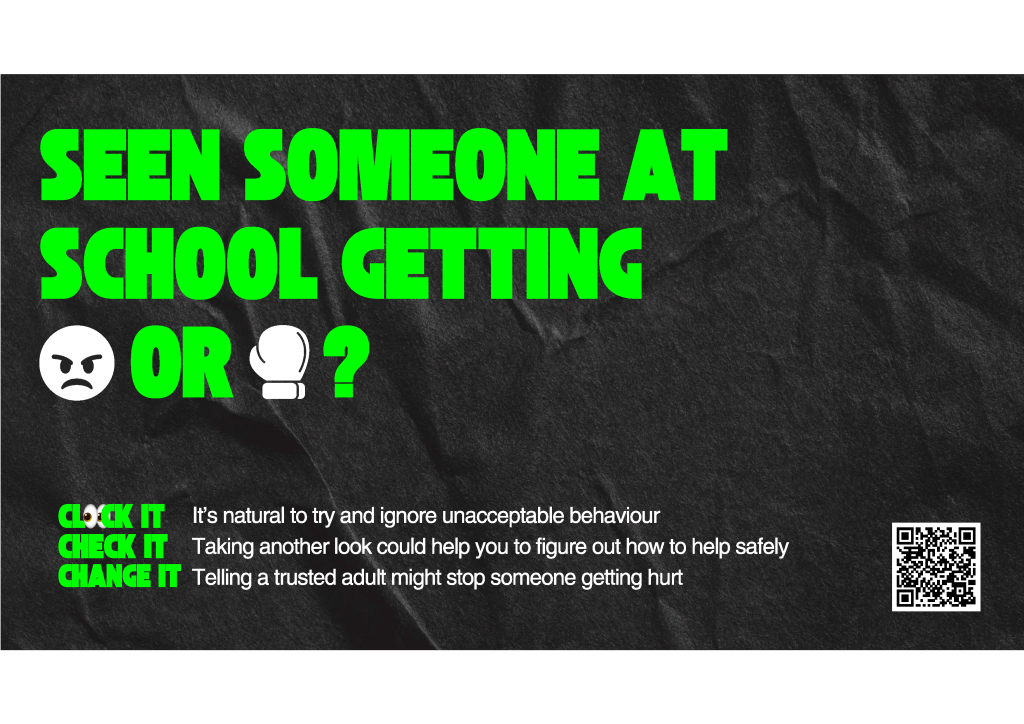
If you don't feel safe to step in, you can report what you see to a trusted adult or anonymously to fearless.org.uk
Creating positive behaviour
BE AN ACTIVE BYSTANDER
Being an Active Bystander involves raising confidence in young people to understand how they might intervene by reporting concerns.
There are 5 ways to be an Active Bystander, these are known as the 5Ds:
Direct Action - If it is safe to do so
Distract - Start or interrupt a conversation
Delegate - Establish the best-placed person to step in
Delay - Aim to slow or calm things down
Document - Note down or record concerns
Difference between 'Snitching' and 'Reporting'
To break down the barriers and negative perceptions, the following has been created with Crimestoppers to help young people identify the differences between ‘snitching’ and reporting.
Snitching
- To get someone else into trouble
- To stop yourself getting into trouble
- To gain something from it
- To hurt or upset someone you don’t like
Reporting
- To keep yourself or someone else safe
- The problem might be urgent
- You may need an adult’s help
- Speaking out because you know something is wrong